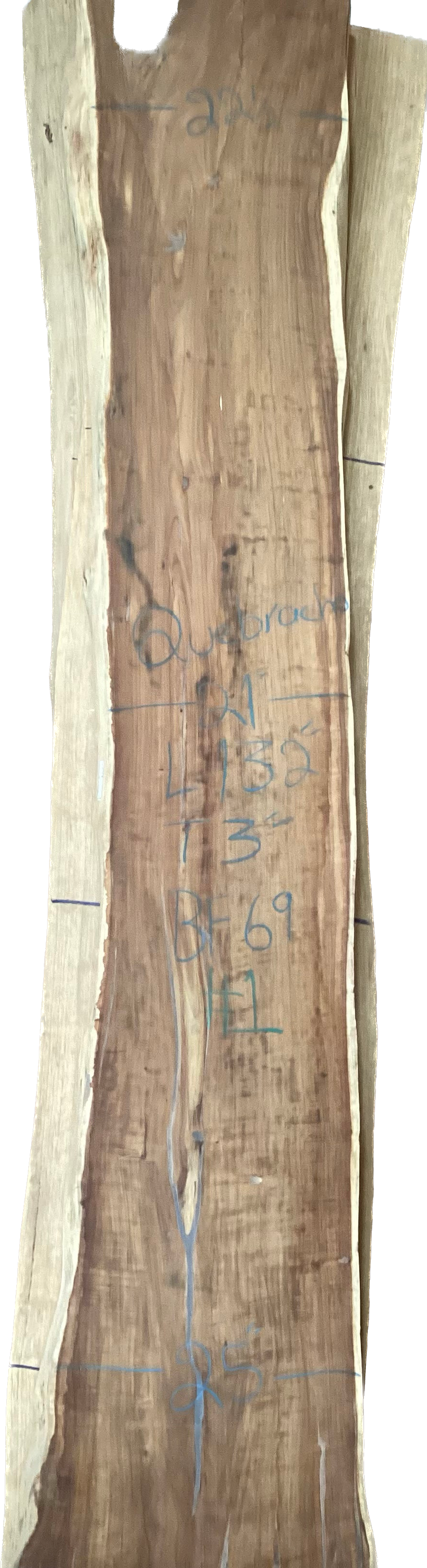
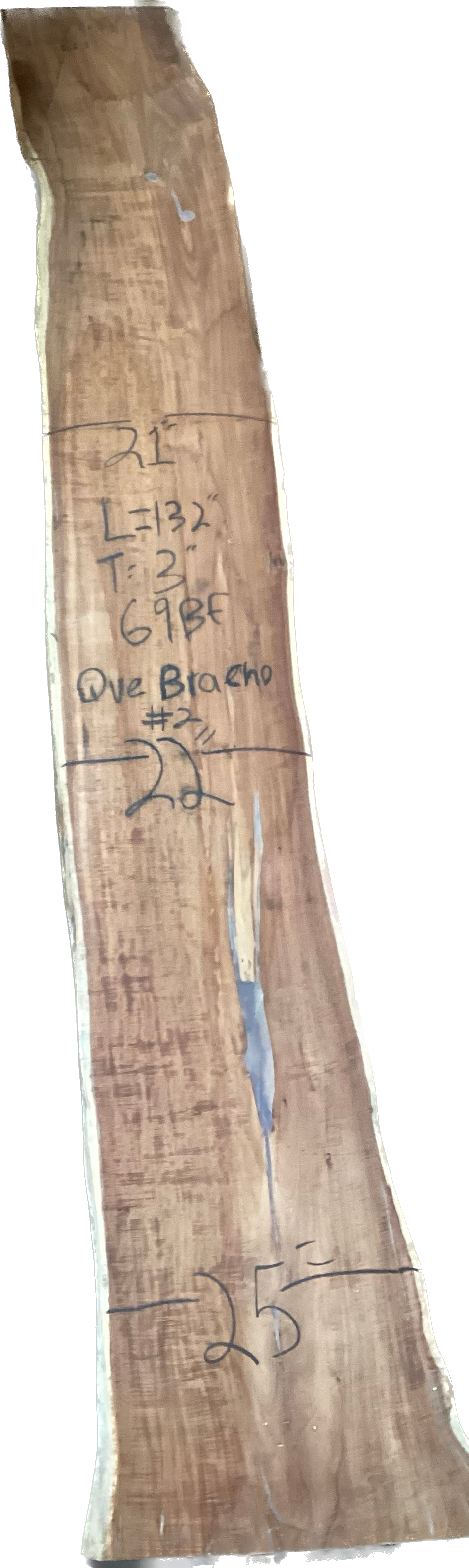
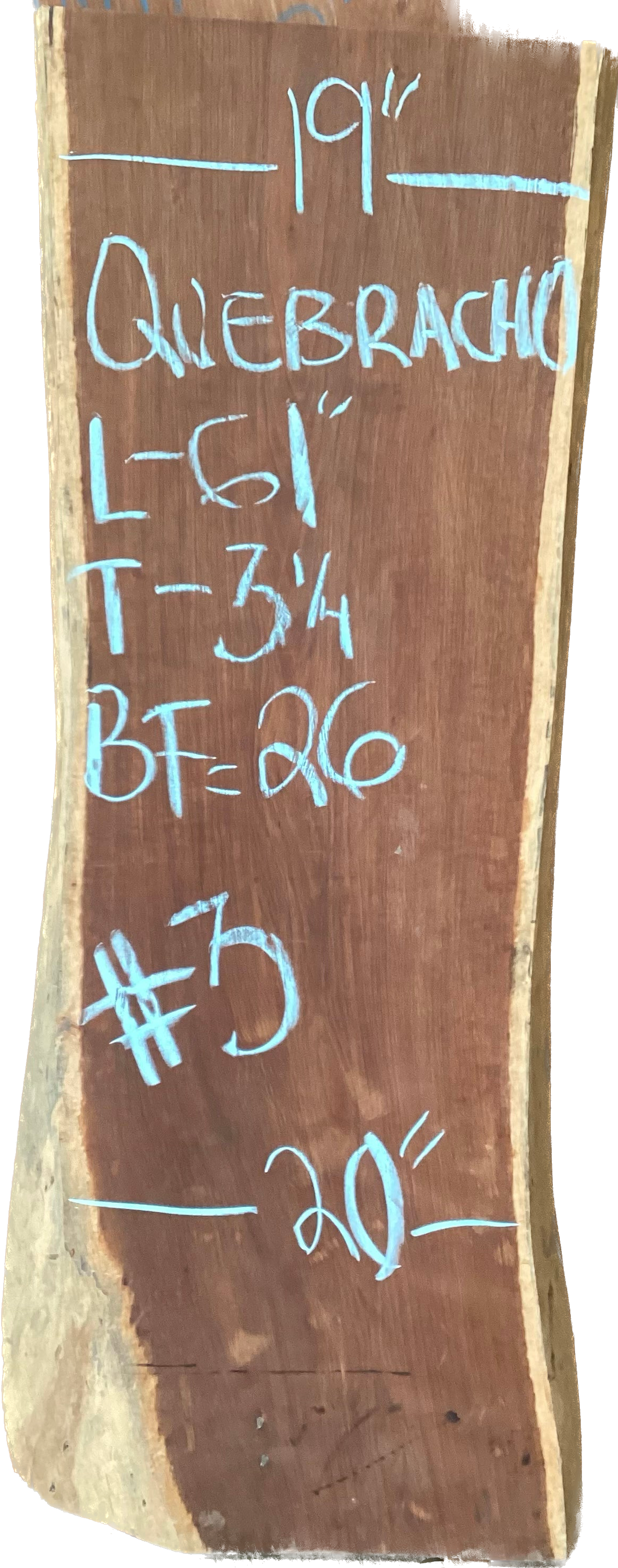
Quebracho
Quebracho
Quebracho
Quebracho
Quebracho
Quebracho

Quebracho

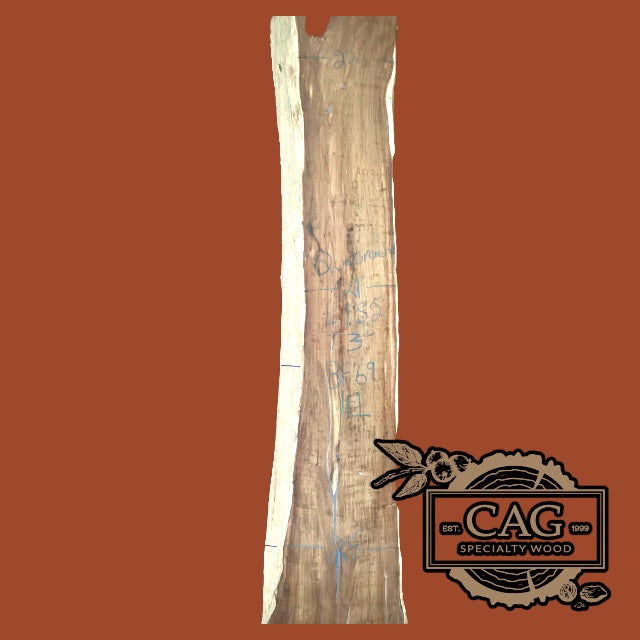
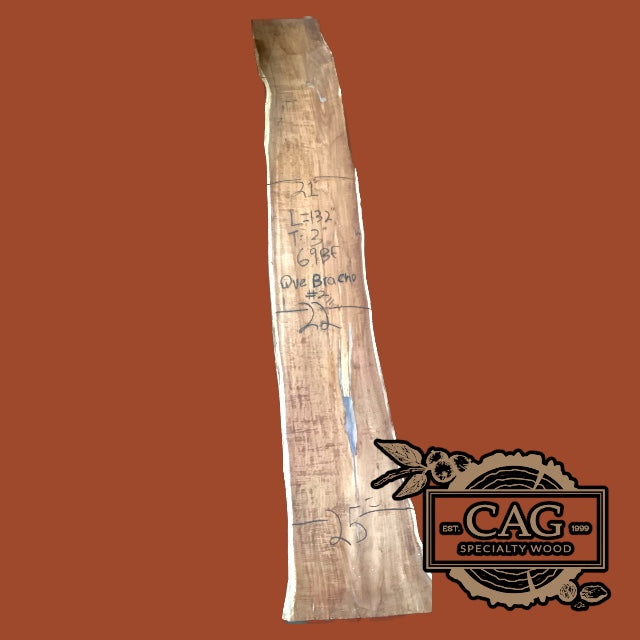
SKU: WC1-ES-QUEBRACHO#2

Common Name(s): Quebracho, quebracho colorado santiagueno, red quebracho

Scientific Name: Schinopsis lorentzii (syn. S. quebracho-colorado, S. hakeana)

Distribution: South America (primarily Bolivia, Paraguay, and Argentina)

Tree Size: 40-80 ft (12-24 m) tall,

                     2-4 ft (.6-1.2 m) trunk diameter

Average Dried Weight: 75.3 lbs/ft3 (1,205 kg/m3)

Specific Gravity (Basic, 12% MC): 1.02, 1.21

Janka Hardness: 3,530 lbf (15,702 N)*

*see special comments below

Modulus of Rupture: 21,010 lbf/in2 (144.9 MPa)

Elastic Modulus: 2,115,000 lbf/in2 (14.58 GPa)

Crushing Strength: 10,560 lbf/in2 (72.8 MPa)

Shrinkage: Radial: 3.8%, Tangential: 6.0%,

                          Volumetric: 10.3%, T/R Ratio: 1.6

 More images |  Identification

Color/Appearance: Heartwood color typically a light to medium reddish brown, sometimes with darker blackish streaks. Color darkens upon prolonged exposure to light. Pale yellow sapwood distinct from heartwood, though transition is gradual. Can have moderate ribbon figure on quartersawn surfaces due to interlocked/roey grain. Overall appearance can resemble genuine mahogany (Swietenia macrophylla).

Grain/Texture: Quebracho has a fine, uniform texture with a high natural luster. Grain tends to be irregular, roey, and interlocked.

Rot Resistance: Quebracho is rated as very durable, and is also resistant to insect attacks. Quebracho also has good weathering characteristics.

Workability: Difficult to work on account of its density and irregular grain. High cutting resistance, as well as pronounced blunting effect on cutters. Dries slowly—and tends to crack, check, and warp while drying. Turns and finishes well, and also able to take on a high natural polish without any finishing agents.

Odor: There is no characteristic odor associated with this wood species, though it is reported to have a bitter taste.

Allergies/Toxicity: Although severe reactions are quite uncommon, quebracho has been reported as a sensitizer. Usually most common reactions include skin and respiratory irritation, as well as nausea. See the articles Wood Allergies and Toxicity and Wood Dust Safety for more information.

Pricing/Availability: Very seldom available in North America, quebracho is much more commonly harvested and processed for its natural tanins, or minimally-processed and used locally in heavy construction. Small log sections, craft blanks, or sawn lumber can sometimes be found on a limited basis. Expect prices to be in the medium to high range for an imported hardwood.

Sustainability: Quebracho is not listed in the CITES Appendices, and  the IUCN reports that Schinopsis lorentzii (listed as S. quebracho-colorado) is a species of least concern, though the synonym S. haenkeana is on the Red List as vulnerable due to a population reduction of over 20% in the past three generations, caused by a decline in its natural range, and exploitation. However, both of these IUCN evaluations date back to 1998 and are in need of updating.

Common Uses: Due its difficult workability, quebracho tends to be minimally processed. Local uses include heavy construction timbers, railroad cross-ties, and fence posts. When exported, uses include furniture, carvings, and turned objects.

Comments: The name quebracho is from the Spanish quebrar hacha, which literally means ‘axe breaker.’ Aptly named, wood in the Schinopsis genus is among the heaviest and hardest in the world. The added descriptor colorado, Spanish for ‘red,’ is sometimes added to the name to help distinguish it from an unrelated species, Aspidosperma quebracho-blanco, which goes by the common name quebracho blanco (white quebracho).

Quebracho was heavily exploited in the late 1800s for use in leather tanning. The tanin-rich heartwood (up to 20-30%) is cut into small chips, where the tanins can subsequently be extracted.[1]

In addition to Schinopsis lorentzii (represented on this page), there is another very similar species that is also sold and harvested as red quebracho: S. balansae. According to Record and Hess, Schinopsis lorentzii is “more abundant in the drier western plains and is sometimes referred to as the Santiago type (quebracho colorado santiagueno),” while the closely related S. balansae, also harvested and sold as quebracho, “extends into the swampy lands fringing the Parana and Paraguay rivers, is known as the Santa Fe or Chaco type (quebracho colorado chaqueno).

Sale price$2,070.00
Size:Slab #2
1 available
Quantity:
Pickup available at 4050 Old Cornelia Hwy SKU: WC1-ES-QUEBRACHO#2

Quebracho

Slab #2

4050 Old Cornelia Hwy
SKU: WC1-ES-QUEBRACHO#2

4050 Old Cornelia Hwy
Gainesville GA 30507
United States

Wood Calculator Section

Need Help Figuring out how much you need ?

One Board foot = 144 Cubic Inches

Example: If you need a piece of wood 12 inches wide, 1 inch thick and 24 inches long, that is equal to 2 board feet.

12 inches x 1 inch x 24 inches = 288 inches. 288/ 144 = 2 board feet